Summary –
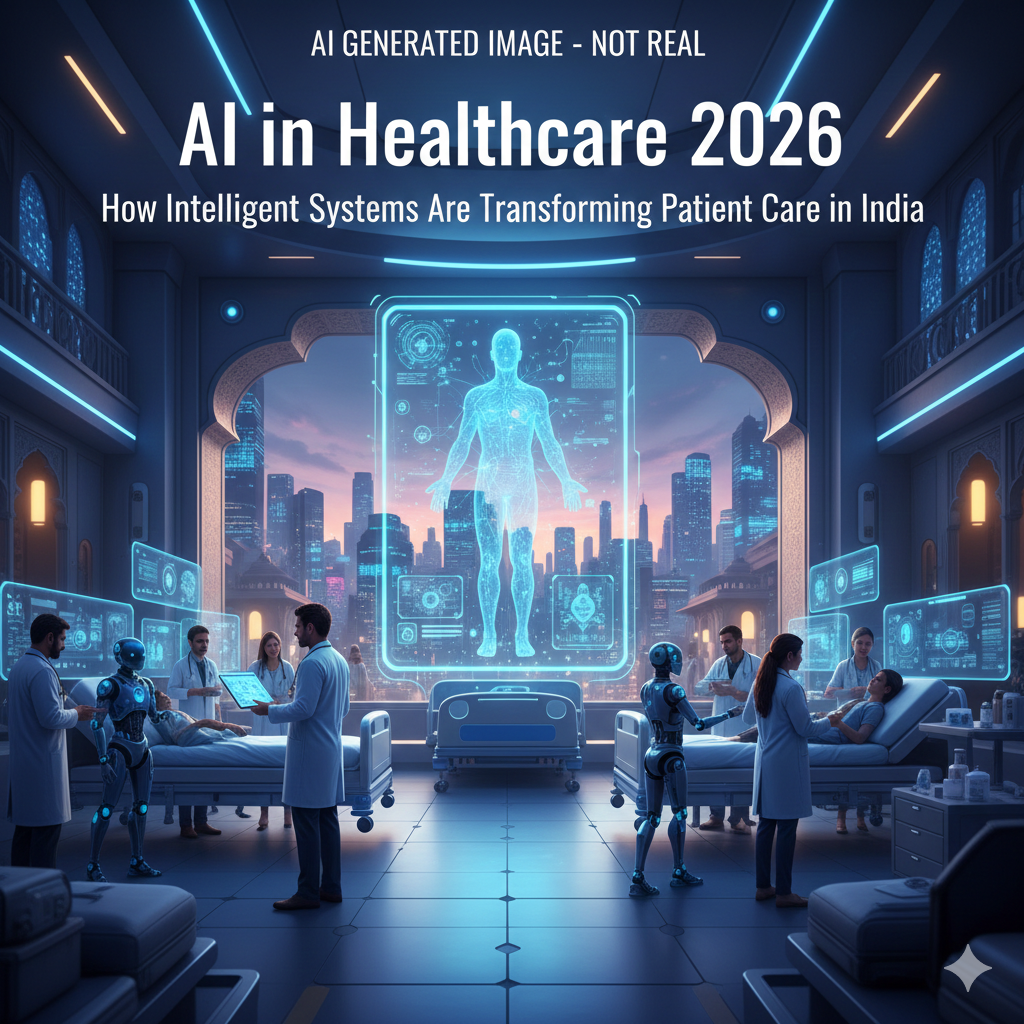
Artificial Intelligence in healthcare has moved from pilot projects to real-world deployment in 2026. Indian hospitals, diagnostic centers, and health-tech startups are using AI for faster disease detection, predictive analytics, robotic surgery assistance, and patient data management. The result is improved accuracy, reduced costs, and better accessibility in both metro and rural regions.
🔟 Top 10 Key Points
- AI-powered diagnostics improve early disease detection
- Predictive analytics helps hospitals manage patient loads
- AI chatbots assist in telemedicine consultations
- Robotic-assisted surgeries gain traction
- Regional language AI improves rural healthcare access
- Medical imaging AI reduces reporting time
- Health-tech startups attract strong funding
- AI drug discovery research expands
- Wearables integrate AI health monitoring
- Ethical AI frameworks for patient data strengthen
In 2026, AI in healthcare is becoming one of India’s fastest-growing tech segments. Hospitals are implementing AI diagnostic tools that analyze X-rays, MRIs, and CT scans within seconds, helping doctors detect abnormalities earlier than traditional methods.
Predictive analytics is playing a critical role in managing hospital resources. AI models analyze patient admission trends, seasonal disease patterns, and emergency cases to optimize staffing and infrastructure planning.
Telemedicine platforms are integrating AI chatbots that pre-screen symptoms before connecting patients to doctors. These systems reduce consultation time while improving patient flow efficiency.
Robotic-assisted surgeries powered by AI precision tools are gaining adoption in advanced medical centers. These systems enhance surgical accuracy and reduce recovery time.
One of the biggest impacts is seen in rural India. AI tools trained in regional languages allow patients to describe symptoms in their native language, improving accessibility and inclusivity.
AI-driven wearable devices are also reshaping preventive healthcare. Smartwatches and health bands now use AI algorithms to monitor heart rate variability, sleep patterns, glucose trends, and stress levels in real-time.
Drug discovery is another promising area. AI algorithms are accelerating molecule screening and clinical trial simulations, potentially reducing development timelines.
However, with greater AI integration comes the need for strong data protection policies. Healthcare providers are investing in encrypted AI frameworks to ensure patient privacy and ethical data usage.
AI in healthcare 2026 represents a major leap toward affordable, efficient, and accessible medical services across India.
📢 Disclaimer
This article is for informational purposes based on healthcare technology trends and publicly available insights in 2026. It does not represent official medical or institutional statements. Content is uniquely written and optimized for website publishing.