Summary –
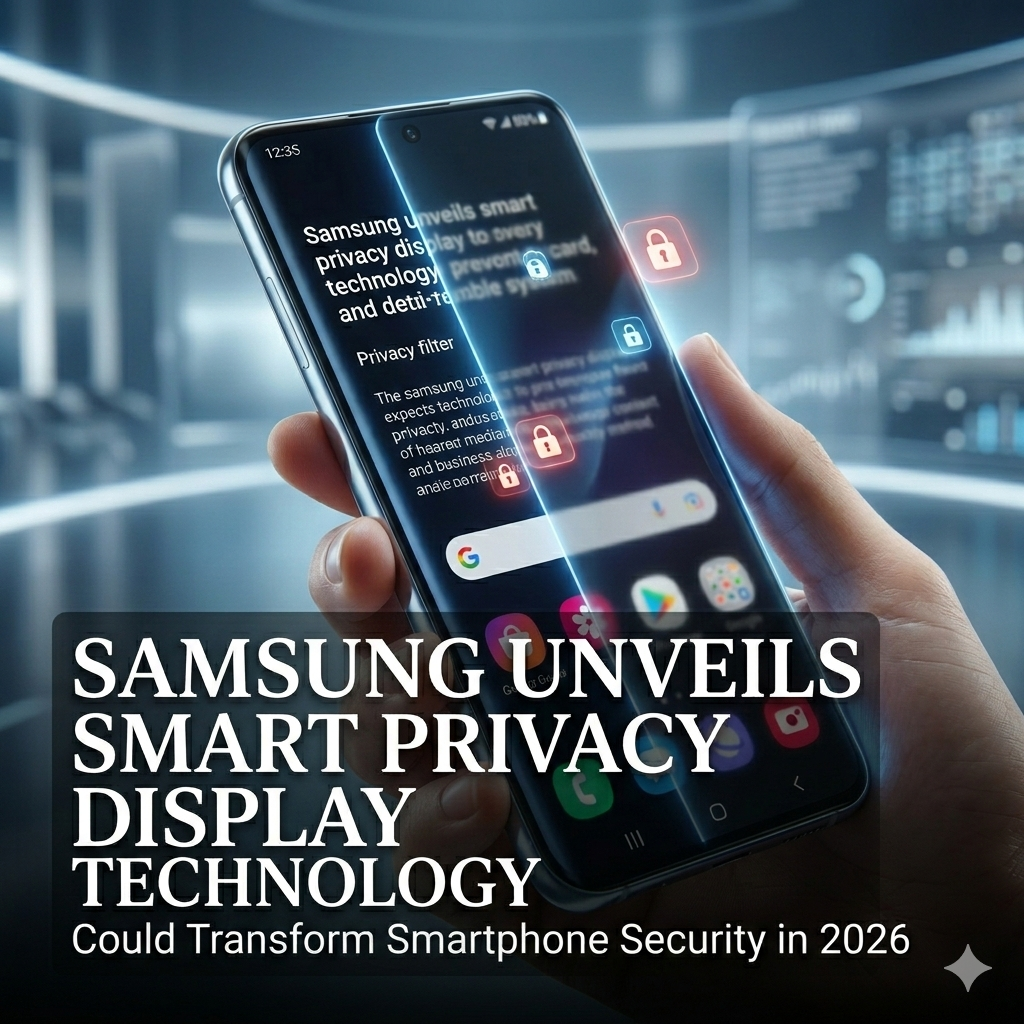
In a major innovation aimed at improving smartphone privacy, Samsung has showcased a next-generation display technology that can selectively hide apps and notifications from side viewers. The new privacy-focused screen solution is designed to protect sensitive content without affecting the user’s viewing experience. As digital privacy concerns rise globally, this breakthrough could redefine how smartphones handle on-screen confidentiality in public spaces. Here’s a detailed look at what this technology means, how it works, and why it matters for everyday users in India and beyond.
The Rise of Display-Level Privacy Protection
In today’s digital world, smartphones carry everything — banking apps, OTP messages, personal chats, confidential emails, and business documents. While biometric security and encryption protect data internally, the screen itself remains vulnerable to “shoulder surfing” — when someone nearby glances at your screen without permission.
Recognizing this growing concern, Samsung has introduced a new display innovation that adds an intelligent privacy layer directly into the screen technology. Unlike traditional third-party privacy screen protectors that darken the display and reduce clarity, this new solution appears to work dynamically — activating privacy features only when needed.
This marks a shift from physical privacy accessories to integrated smart display privacy systems.
How Samsung’s New Privacy Display Technology Works
While detailed technical specifications are yet to be fully disclosed, early demonstrations suggest that the display can:
- Detect viewing angles
- Limit side visibility of specific apps
- Hide notifications from lateral viewers
- Maintain full clarity for the primary user
- Work at the software-display integration level
This means that if you are sitting in a metro, airport, office, or café, your screen may automatically reduce visibility to people sitting beside you — without affecting your own viewing experience.
The feature appears to be app-specific, meaning sensitive apps like:
- Banking
- UPI payments
- Messaging apps
- Corporate email
- Password managers
could trigger the privacy shield automatically.
That’s a major upgrade compared to static privacy screen guards.
Why This Innovation Matters in 2026
Digital privacy is becoming one of the biggest tech conversations globally. With:
- Increasing UPI usage in India
- Digital wallets becoming mainstream
- Work-from-anywhere culture rising
- OTP-based authentication everywhere
screen visibility risks are higher than ever.
India alone processes billions of UPI transactions monthly. A visible OTP or banking detail on-screen can be misused within seconds.
Samsung’s move suggests that smartphone companies are now addressing “visual privacy” — not just cybersecurity.
How It Could Impact Future Galaxy Smartphones
While the company has not officially confirmed which devices will get this feature first, industry observers believe it could debut in:
- Premium Galaxy S series
- Foldable smartphones
- Business-oriented enterprise models
If successfully implemented, this technology could:
- Become a premium feature in flagship devices
- Later trickle down into mid-range models
- Inspire other Android manufacturers to follow
Privacy may soon become a competitive differentiator — just like camera quality and battery life.
Comparison: Traditional Privacy Screens vs Smart Display Privacy
| Feature | Traditional Privacy Screen | Smart Integrated Display |
|---|---|---|
| Clarity | Reduced brightness | Full clarity for user |
| Installation | Physical attachment | Built-in technology |
| Flexibility | Always darkened | Selective activation |
| App-level control | No | Likely yes |
| Aesthetic impact | Visible dark filter | Seamless |
This difference could significantly improve user experience.
Potential Use Cases in India
This innovation is particularly relevant in the Indian market due to:
Public Transport Usage
Millions use smartphones in crowded trains, metros, and buses.
Digital Banking Growth
UPI, net banking, and fintech apps are now everyday tools.
Work-from-Cafe Culture
Freelancers and professionals often work in shared spaces.
Rising Cyber Fraud Cases
Visual data exposure is a growing vulnerability.
By reducing accidental data exposure, this technology could prevent small but critical privacy breaches.
Is This the Future of Smartphone Displays?
The smartphone industry has already evolved through:
- Edge displays
- Foldable screens
- Under-display cameras
- Higher refresh rates
- Eye comfort modes
Now, privacy-enhanced displays may become the next major innovation wave.
If widely adopted, we may soon see:
- AI-powered privacy detection
- Face-based screen visibility
- Adaptive blur for sensitive content
- Smart notification masking
Privacy could become an intelligent, automated process rather than a manual setting.
What This Means for Tech Industry Competition
If Samsung successfully commercializes this feature:
- Other Android brands may accelerate similar R&D
- Apple may respond with enhanced privacy display modes
- Enterprise smartphone demand may increase
- Government and corporate sectors may adopt such devices
Privacy is becoming a premium selling point — especially in a world where digital surveillance concerns are increasing.
Challenges Ahead
However, there are still important questions:
- Will it affect battery consumption?
- Will brightness or color accuracy change?
- Will it work with tempered glass protectors?
- Can developers customize privacy triggers?
- Will it be optional or always active?
Real-world performance testing will determine its success.
Consumer Perspective: Is It Really Needed?
Some users may argue that screen guards already solve the problem. However:
- They reduce brightness
- They distort color
- They affect display sharpness
- They are not app-selective
An integrated solution removes these limitations.
For users handling financial data daily, this feature could offer peace of mind.
The Bigger Privacy Trend in 2026
This development aligns with broader technology trends:
- AI-driven device security
- On-device encryption
- Private cloud storage
- Digital identity verification
- Data transparency regulations
Governments worldwide are tightening data privacy laws. Consumers are becoming more aware. Companies that innovate in privacy-first technology may gain stronger trust.
Samsung’s new display approach fits perfectly into this narrative.
Final Thoughts
Smartphones are no longer just communication tools — they are financial wallets, identity cards, workstations, and entertainment hubs.
As their importance grows, so does the need for better privacy protection.
Samsung’s privacy-enabled display technology represents a forward-thinking step in addressing real-world user concerns. If implemented effectively in commercial devices, it could redefine how we view and protect our digital lives.
In a world where even a quick glance at someone’s screen can expose sensitive information, innovations like this may soon become essential — not optional.
The future of smartphones may not just be faster or brighter — it may be smarter and more private.
Disclaimer
This article is based on publicly available information, industry reports, company demonstrations, and media coverage available at the time of writing. Gadgetora is an independent informational website and is not affiliated with or officially connected to any brand mentioned. The purpose of this content is to provide general technology insights and analysis for readers.