Summary –
Generative AI is changing how entertainment content is created and consumed. From automated editing to personalized storytelling, AI is becoming a major force in the media and entertainment industry.
Top 10 Key Points
- AI assisting video and content production
- Personalized streaming recommendations improving engagement
- AI-generated visuals and effects reducing production costs
- Faster content localization for global audiences
- AI-powered editing and post-production tools
- Interactive storytelling emerging as a trend
- AI improving advertising personalization
- Faster content discovery on streaming platforms
- Ethical concerns around AI-generated media
- Human creativity remaining essential in storytelling
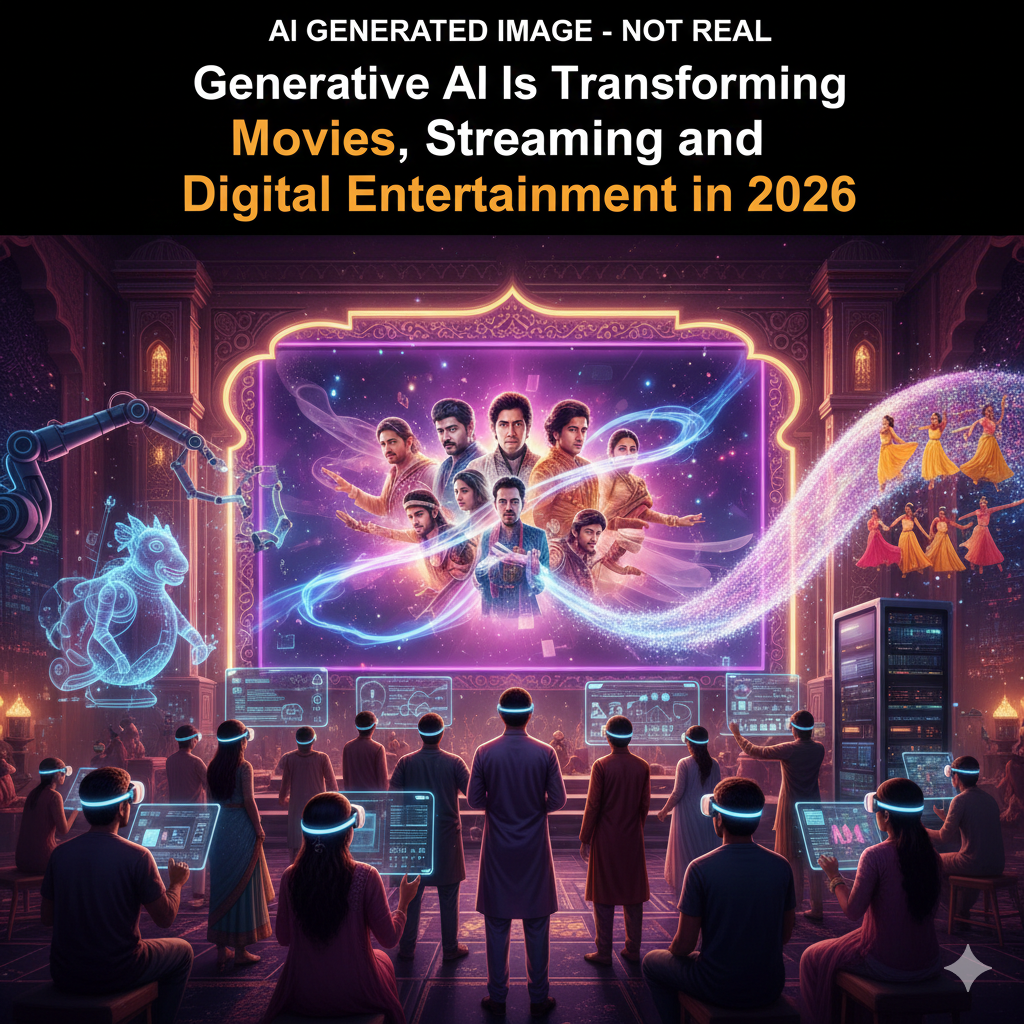
The entertainment industry is experiencing one of its biggest technological transitions as generative artificial intelligence continues to influence how content is produced and consumed in 2026. From filmmaking and streaming platforms to gaming and advertising, AI is becoming deeply embedded in creative workflows.
Generative AI tools are increasingly being used in pre-production and post-production processes. Tasks such as background generation, visual effects enhancement, automated editing, and subtitle generation can now be completed faster and at lower costs. This allows creators to focus more on storytelling while technology handles repetitive processes.
Streaming platforms are also leveraging AI to improve user engagement. Recommendation engines are becoming more sophisticated, analyzing viewing habits to suggest content that aligns closely with individual preferences. This improves retention while helping users discover content more efficiently.
Another emerging trend is personalized entertainment experiences. AI-driven systems can adapt trailers, promotional material, or even storytelling elements depending on audience preferences. This opens new opportunities for interactive and adaptive content formats.
In India, AI adoption in media is growing across advertising, sports broadcasting, and digital content production. Industry reports suggest that AI-driven automation could significantly improve productivity while enabling smaller creators to compete with larger studios through efficient workflows.
However, the rapid adoption of AI also brings challenges. Concerns around copyright ownership, deepfake technology, and authenticity continue to spark debates within the industry. Balancing technological efficiency with creative integrity remains an important discussion moving forward.
Despite these challenges, AI is unlikely to replace human creativity. Instead, it is emerging as a collaborative tool that enhances creativity and enables faster experimentation. As audiences demand more personalized and immersive experiences, generative AI is expected to play a central role in shaping the future of entertainment.
Disclaimer
This article is based on publicly available market insights, technology developments, and industry discussions currently circulating in the media and entertainment sector. The information is intended for general informational purposes only and does not represent personal views or official statements from any organization.