
Summary –
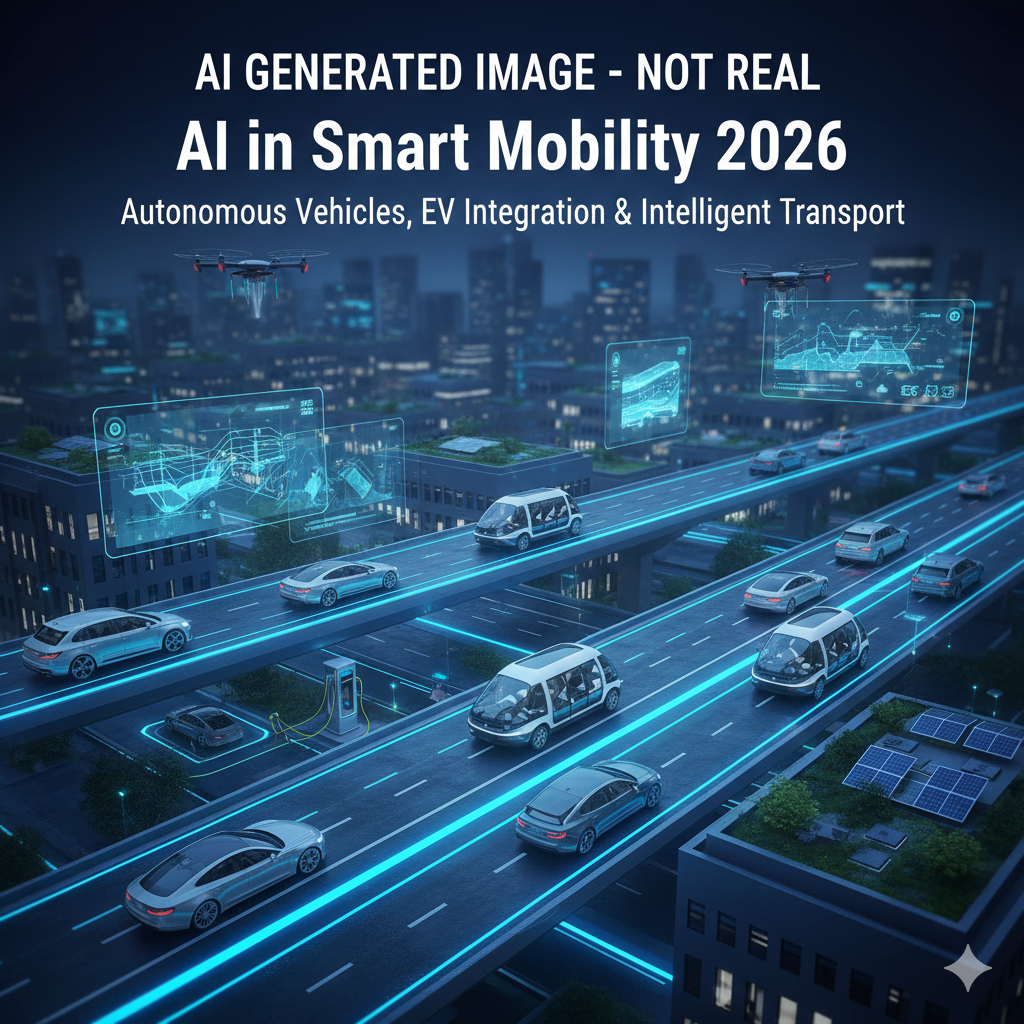
Artificial Intelligence is transforming transportation in 2026. From AI-assisted driver systems and autonomous vehicle pilots to intelligent traffic management and EV optimization, smart mobility solutions are reshaping urban infrastructure and logistics networks globally and in India.
Top 10 Key Points
- AI-powered driver assistance systems expand
- Autonomous vehicle pilot projects grow
- EV battery optimization uses AI analytics
- Smart traffic management improves urban flow
- AI logistics platforms enhance supply chains
- Fleet management integrates predictive analytics
- Ride-sharing apps use AI route optimization
- AI improves road safety monitoring
- Government smart city projects adopt AI
- Future mobility investment increases
Smart mobility in 2026 is increasingly powered by Artificial Intelligence. Advanced driver assistance systems (ADAS) now use AI vision and sensor fusion technologies to enhance vehicle safety.
Autonomous vehicle pilot projects are expanding in controlled environments. AI algorithms analyze real-time traffic data, weather conditions, and obstacle detection to improve navigation accuracy.
Electric vehicle (EV) manufacturers are using AI to optimize battery performance and charging cycles. Predictive analytics helps improve battery longevity and energy efficiency.
Urban traffic management systems are integrating AI to reduce congestion. Smart traffic signals adjust dynamically based on real-time vehicle flow data.
Logistics companies rely on AI-powered route optimization to reduce fuel costs and delivery times.
Fleet management platforms analyze vehicle health data using predictive models, minimizing breakdown risks.
Ride-sharing platforms integrate AI to match drivers with riders efficiently while optimizing travel routes.
Governments implementing smart city initiatives are adopting AI mobility solutions to enhance infrastructure planning.
AI in transportation is driving safer, cleaner, and more efficient mobility systems in 2026.
📢 Disclaimer
This article is created for informational purposes only. The trends, developments, and insights discussed are based on publicly available transportation reports, automotive industry news, market research publications, and online sources accessible in 2026. This content does not represent official statements from automotive manufacturers, government authorities, or transport regulators. Readers should refer to verified industry reports or official announcements for specific data and decisions.