Summary –
Mobile banking fraud is increasing as scammers exploit SMS phishing, fake apps, and SIM swap techniques. Recognizing early warning signs can prevent financial loss.
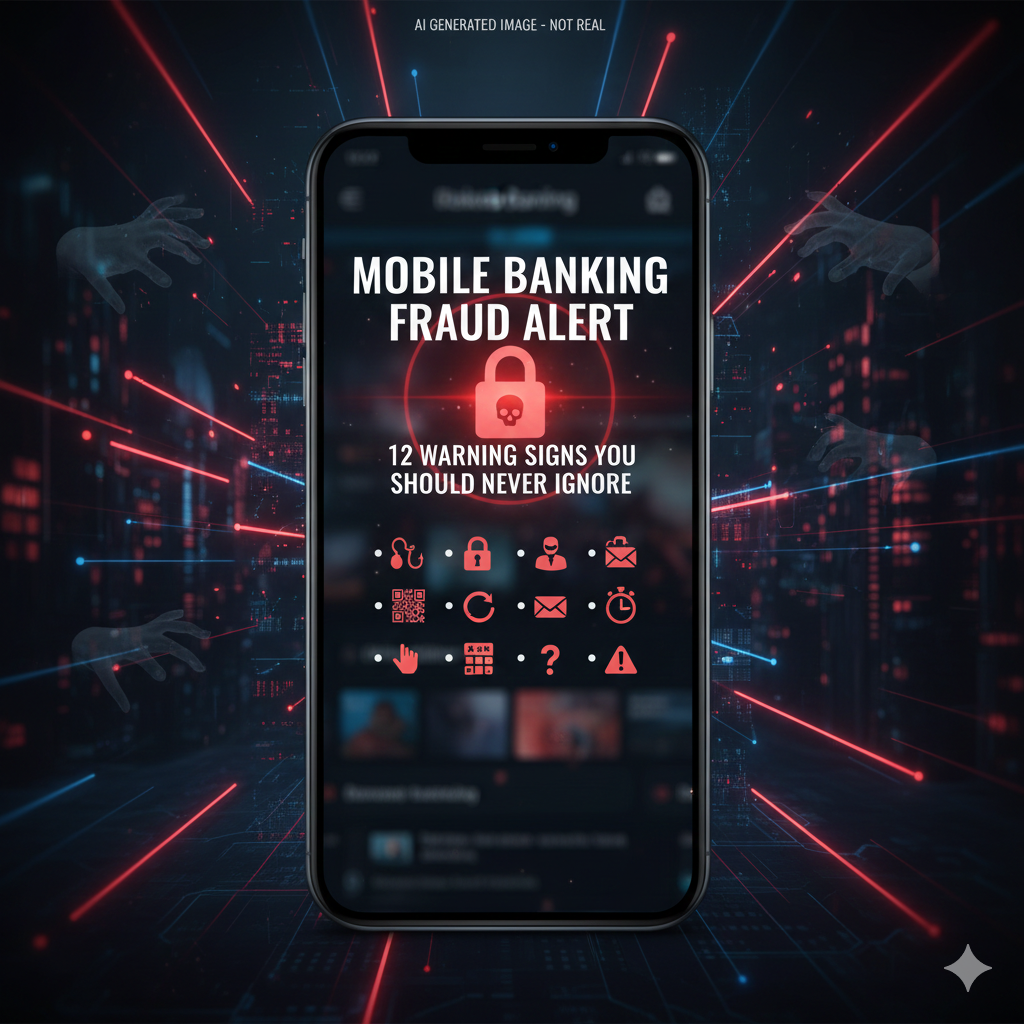
Top 12 Key Points
- Unknown debit SMS alerts
- Sudden network loss (possible SIM swap)
- Fake banking app downloads
- Suspicious OTP requests
- Phishing SMS links
- Fake KYC update calls
- Too-good-to-be-true offers
- Bank account login alerts from unknown device
- Email spoofing attempts
- Urgent account suspension warnings
- Unexpected credit messages
- Unknown auto-debit setups
Mobile banking apps have simplified financial management, but cybercriminals are exploiting user trust.
One rising scam is SIM swap fraud. If your phone suddenly loses network service, contact your telecom provider immediately. Fraudsters may have duplicated your SIM to intercept OTPs.
Phishing SMS messages often mimic banks like State Bank of India. These messages urge users to “update KYC” via suspicious links.
Always download apps from official stores only. Fake apps often look identical to legitimate banking platforms.
Never share OTPs, debit card details, or CVV numbers. Banks never ask for confidential information via calls.
Enable biometric login and app lock features for extra protection.
Immediate reporting to your bank can freeze suspicious transactions before funds are withdrawn.
📢 Disclaimer
This content is for awareness purposes only. It does not substitute professional financial advice. Always verify suspicious communication directly through your bank’s official website or branch.