Summary –
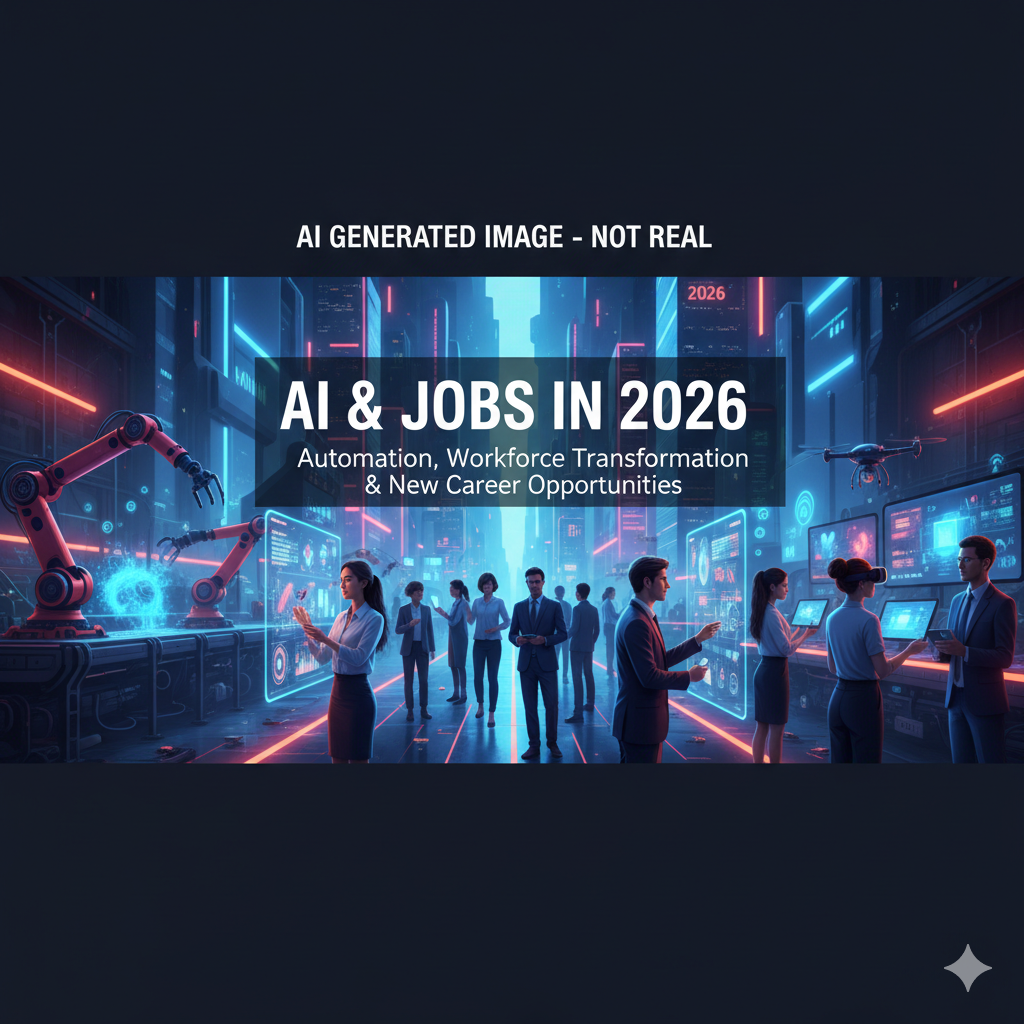
Artificial Intelligence in 2026 continues to reshape the global workforce. While automation replaces repetitive tasks, it also creates new roles in AI development, data science, cybersecurity, and AI governance. This article explores the evolving job landscape, reskilling initiatives, and emerging career opportunities driven by AI innovation.
Top 10 Key Points
- Automation replaces repetitive administrative tasks
- AI creates new tech-focused job roles
- Demand for AI engineers increases
- Data science careers expand rapidly
- AI governance and compliance roles emerge
- Reskilling programs gain corporate focus
- Hybrid human-AI collaboration becomes standard
- Freelancers leverage AI productivity tools
- AI literacy becomes essential skill
- Workforce transformation accelerates globally
The debate around AI and jobs continues in 2026, but the narrative has shifted from replacement to transformation. Automation tools now handle repetitive tasks such as data entry, scheduling, document review, and customer query handling.
However, AI adoption has simultaneously created demand for specialized roles including AI engineers, prompt engineers, data scientists, AI trainers, and model auditors.
AI governance and compliance professionals are increasingly required as companies align with regulatory frameworks.
Corporate reskilling initiatives are expanding. Organizations are offering AI literacy programs to upskill employees and integrate AI tools into workflows.
Hybrid collaboration between humans and AI systems is becoming the norm. Employees use AI assistants to enhance productivity rather than compete with automation.
Freelancers and digital creators are also benefiting from AI-powered content tools, enabling faster project delivery and scalability.
Educational institutions are introducing AI-focused degree programs and certification courses to prepare students for the evolving job market.
While some roles are being automated, AI-driven industries are generating high-value employment opportunities in emerging sectors.
AI in 2026 is reshaping the workforce landscape — emphasizing adaptability, continuous learning, and digital skills.
📢 Disclaimer
This article is for informational and editorial purposes only. The workforce trends and employment insights discussed are based on publicly available labor reports, industry research, news publications, and online sources accessible in 2026. It does not constitute career advice, employment guarantees, or official labor statistics. Readers should consult verified employment agencies, HR professionals, or official government data for precise workforce information.