Summary –
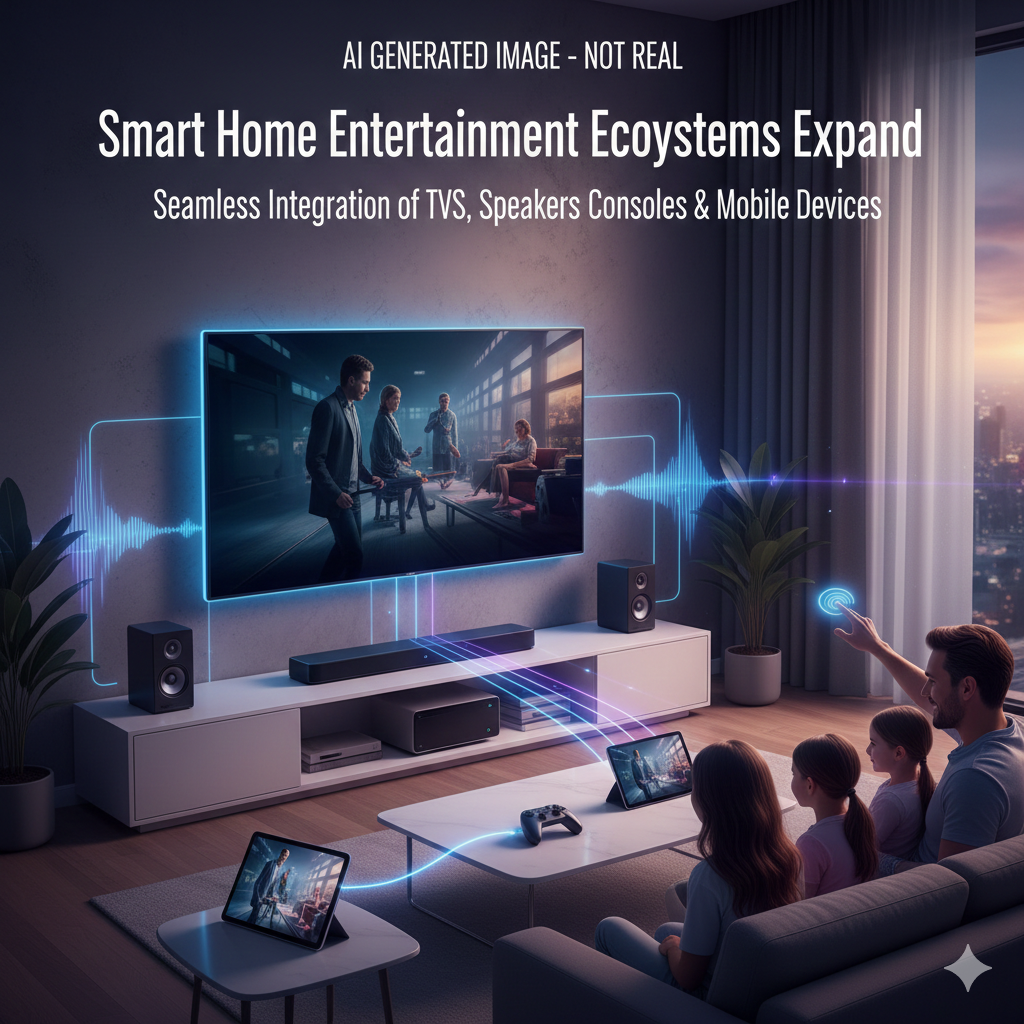
The smart home entertainment ecosystem is expanding in 2026 as televisions, gaming consoles, smartphones, and audio systems become more interconnected. Seamless integration is improving convenience and immersive experiences for users.
Top 10 Key Points
- Smart TVs acting as home control hubs
- Seamless device connectivity across platforms
- Wireless audio integration improving convenience
- Voice-controlled entertainment systems rising
- Cross-device streaming becoming standard
- Gaming consoles syncing with smart displays
- Smartphone-to-TV content mirroring improving
- AI-powered device coordination emerging
- Unified entertainment dashboards gaining popularity
- Smart ecosystems becoming mainstream in India
The modern home entertainment experience is no longer defined by a single device. In 2026, smart home ecosystems are creating interconnected environments where televisions, gaming consoles, laptops, smartphones, and speakers work seamlessly together.
Smart TVs now function as central control hubs for entertainment and home automation. Users can manage lighting, security cameras, and even climate control directly from their TV interface. This integration simplifies daily routines and enhances user convenience.
Cross-device streaming has become increasingly seamless. Users can begin watching a movie on their smartphone and continue on their television without interruption. Wireless audio systems sync instantly with TVs and gaming consoles to provide immersive surround sound experiences.
Voice assistants are also playing a key role. With improved speech recognition and natural language processing, users can control multiple devices simultaneously using simple voice commands. This eliminates the need for multiple remotes and complex navigation.
Gaming consoles are becoming more deeply integrated into smart ecosystems. Automatic display optimization, synced audio settings, and cloud-based game access allow gamers to enjoy smooth transitions between devices.
Artificial intelligence is coordinating device interactions more efficiently. For example, when a movie starts, lights may automatically dim, audio settings adjust, and notifications minimize. These automated adjustments enhance immersion without manual intervention.
In India, smart home adoption is gradually increasing, especially in urban areas. As devices become more affordable and internet connectivity improves, integrated ecosystems are expected to become more common.
The future of entertainment lies in connectivity. Rather than individual devices operating independently, the ecosystem approach ensures smoother experiences, better control, and enhanced personalization for users.
Disclaimer
This article is based on publicly available industry trends, technology advancements, and market discussions. The information is provided for informational purposes only and does not represent personal opinions or official statements from any specific company or brand.